What Defines Modern Mobile Games
Mobile games are mere portable entertainment systems situated on everyday devices. It makes use of the functionalities of any smartphone to bring interactive content anytime and anywhere. Not only do these games evolve dynamically, but they also keep running over the web and hence are system-integrated.
It uses the description "live" environments rather than static products. Updates, seasonal content, competitive ladders, and community features contribute to gameplay constantly changing and expanding rather than being nailed to the floor at a particular point.

Portable Entertainment Powered by Smartphones
At the foundation of modern mobile gaming is accessibility. Smartphones provide processing power, high-resolution displays, internet connectivity, and touch interfaces in a single device that most people carry daily. This portability allows players to engage with games during short breaks, commutes, or extended sessions at home.
Developers design experiences specifically for mobile hardware, optimizing performance for touch input, smaller screens, and battery constraints. This results in gameplay systems tailored to fast engagement cycles and intuitive controls. The portability of smartphones also means that games are integrated into daily routines rather than confined to dedicated gaming spaces.
Real-Time Multiplayer Experiences
A defining characteristic of contemporary mobile games is real-time multiplayer functionality. Through cloud servers and low-latency networking, players compete or cooperate with others across different regions. Real-time systems include head-to-head battles, team-based matches, and synchronized global events.
These features require infrastructure capable of managing matchmaking, player rankings, and secure data transmission. Multiplayer architecture transforms mobile games into social environments where outcomes depend on both individual skill and collaborative strategy. As a result, mobile gaming increasingly resembles interconnected competitive ecosystems rather than isolated entertainment.
Cloud Connectivity and Persistent Worlds
Cloud integration enables mobile games to maintain persistent player data, synchronize progress across devices, and deliver regular content updates. Player accounts store achievements, inventory, rankings, and customization choices on remote servers, ensuring continuity regardless of hardware changes.
Persistent worlds allow developers to introduce new challenges, seasonal events, and narrative expansions without requiring players to download entirely new applications. This approach supports long-term engagement and transforms games into evolving platforms. Cloud systems also enable cross-platform synchronization, allowing users to move between devices while maintaining consistent progress.
GPS and Sensor-Based Mechanics
Modern smartphones include GPS modules, accelerometers, gyroscopes, and other motion sensors. Developers use these tools to design gameplay that reacts to physical movement and environmental positioning. Motion detection can influence in-game actions, while GPS data can unlock location-specific objectives.
These systems expand the scope of interaction beyond the screen. Instead of relying solely on taps and swipes, games can respond to walking, turning, or changes in orientation. Sensor integration adds layers of immersion and technical complexity, positioning mobile gaming as a platform that blends digital logic with physical input.
Augmented and Location-Driven Gameplay
Some mobile games overlay digital elements onto the physical world through camera-based augmented systems. Others use location tracking to create objectives tied to real-world geography. This design approach merges exploration with gameplay mechanics.
By linking digital rewards to physical movement, developers create experiences that encourage outdoor activity and spatial awareness. Location-driven design demonstrates how mobile games can function as hybrid ecosystems, integrating software architecture with geographic context in structured and interactive ways.
Popular Mobile Game Categories
Mobile games can be divided into core parts based on the way mechanics interact with the player, progression in the game, and centralized features. While most games today borrow various elements from different genres, these categorizations encapsulate the core design approach of most mobile games.
The table here indicates the game categories and their dominant game modes foundations.
- Strategy & Competitive — Live tactical matches, skill-based ranking ladders, worldwide competitive boards
- Adventure & Fantasy — Quest-centered storytelling, evolving character abilities, immersive digital realms
- Location-Based Games — Progression linked to physical movement, objectives triggered by real-world locations
- Casual & Social — Fast-access gameplay sessions, rotating daily activities, integrated player interaction
- Simulation & Creative — World-building systems, deep customization options, open-ended sandbox design
How Technology Shapes Mobile Gaming
Mobile gaming relies on sophisticated technological systems that operate behind the scenes. While gameplay may appear intuitive, the underlying architecture includes real-time networking, data storage, and sensor integration.
These technological foundations allow developers to deliver interactive environments that respond dynamically to player input and global participation.
GPS Integration
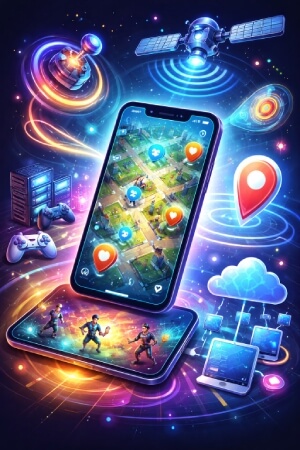
GPS functionality enables games to map digital objectives onto real-world coordinates. Developers use geolocation data to trigger events, spawn in-game items, or unlock achievements tied to specific areas. This integration requires precise positioning systems and careful calibration to ensure consistent user experiences.
By incorporating geographic data, games can create dynamic environments influenced by actual movement patterns. GPS-based systems must also address privacy considerations and user permissions, ensuring compliance with platform standards and data protection practices.
Motion Sensors and Device Input
Accelerometers and gyroscopes allow mobile devices to detect orientation, speed, and movement. Games use these sensors to translate physical gestures into digital actions. For example, tilting a device may steer a vehicle, while shaking it could activate specific features.
Sensor-based input expands gameplay possibilities beyond touch controls. It introduces a physical dimension that requires coordination between software algorithms and hardware calibration. Developers must account for varying device capabilities to ensure consistent performance across different smartphone models.
Real-Time Matchmaking Systems
Matchmaking technology connects players based on skill level, location, or game mode preferences. These systems analyze data in real time to create balanced matches and minimize wait times. Behind this process are server infrastructures designed to handle high traffic volumes and maintain stable connections.
Real-time matchmaking contributes to fairness and player retention. By grouping participants with comparable skill levels, games create competitive environments that feel structured and equitable. This technical layer supports ranking systems, seasonal ladders, and competitive tournaments.
Live Events and Continuous Updates
Mobile games frequently introduce live events, timed challenges, and seasonal content expansions. Developers use remote servers to deploy updates without requiring full application replacements. This approach keeps gameplay environments fresh and responsive to player feedback.
Live event systems involve scheduling tools, analytics tracking, and content management pipelines. Continuous updates transform games into evolving services rather than fixed products, reinforcing their identity as digital ecosystems sustained through active development.
Cross-Platform Synchronization
Cross-platform synchronization allows players to access their accounts across multiple devices while maintaining consistent progress. Cloud-based storage systems handle authentication, data backup, and real-time updates.
This feature enhances accessibility and resilience. Players can transition between devices without losing achievements or purchases. Cross-platform functionality also strengthens the ecosystem model by positioning games as account-based environments rather than device-bound applications.
The Social Layer
Looking beyond the mechanical and technical, mobile games are structured around social systems. These interactions create shared experiences and turn the solitary act of playing into that of a group effort. Social engagement actively encourages retention in the game by fostering cooperation, competition, and communication.
Highlighting in-game and player-generated features, the social layer brings players together through the network systems created.
Team Systems and Alliances
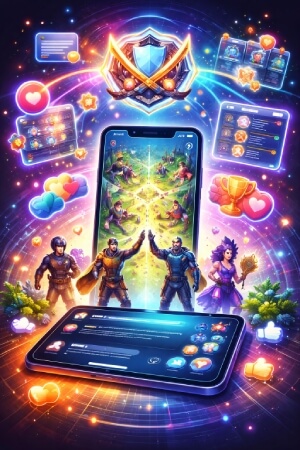
Many mobile games include guilds, clans, or alliance systems that allow players to organize into groups. These structures often provide shared objectives, cooperative missions, and collective rewards. Participation in teams encourages long-term engagement and strategic coordination.
Alliance systems typically include leadership roles, contribution tracking, and shared resource management. They reinforce social accountability and create structured hierarchies within the gaming environment.
In-Game Messaging and Communication
Communication tools such as chat systems and direct messaging enable coordination and social interaction. These features support cooperative missions and competitive planning. Moderation tools and reporting systems are commonly integrated to maintain community standards.
Messaging systems also contribute to event participation by broadcasting announcements and updates. Effective communication infrastructure is essential for sustaining large-scale multiplayer environments.
Competitive Seasons and Events
Seasonal ranking systems introduce time-limited competitive cycles. Players compete to achieve higher ranks within defined periods, often receiving rewards based on performance. This structure resets periodically, maintaining ongoing engagement.
Season-based systems encourage regular participation and create structured progression timelines. They also provide measurable milestones that define player achievement within the ecosystem.
Real-World Interaction
Some mobile games extend beyond the screen by encouraging players to interact with their surroundings. Through GPS tracking and environmental triggers, gameplay objectives may depend on real-world movement.
By linking digital systems to physical locations, these games reshape how players experience their cities and neighborhoods. Exploration becomes part of the game structure, and environmental awareness gains interactive significance.
This approach demonstrates how mobile gaming can integrate digital architecture with geographic space. The result is a hybrid experience where physical movement influences virtual progression, reinforcing the ecosystem concept that spans both domains.
Why Mobile Gaming Continues to Grow
Mobile gaming expands because it aligns with broader technological and cultural trends. It combines accessibility, innovation, and social connectivity within devices already embedded in daily life.
Key factors contributing to ongoing growth include:
- Accessible on everyday devices
- Constant innovation in technology and design
- A global player base across regions
- Flexible play sessions adaptable to schedules
- Expanding genres and evolving mechanics
Connected Worlds in Your Pocket
Mobile gaming no longer stands for simple entertainment. It offers integrated systems that bring together technology, social background, and real-world interaction. Done via cloud infrastructure, sensor integration, and global networks, these platforms serve as evolving digital ecosystems.
As technology marches on and societal communities become closely entwined with the gaming source, it is envisioned the layers of interaction and complexity involving all sorts of players might deepen further. Queue a completely matured world flourishing thereafter a mere once being the games of light and breezy graphic-based portable entertainment that would not have been substantial or lasting activities.